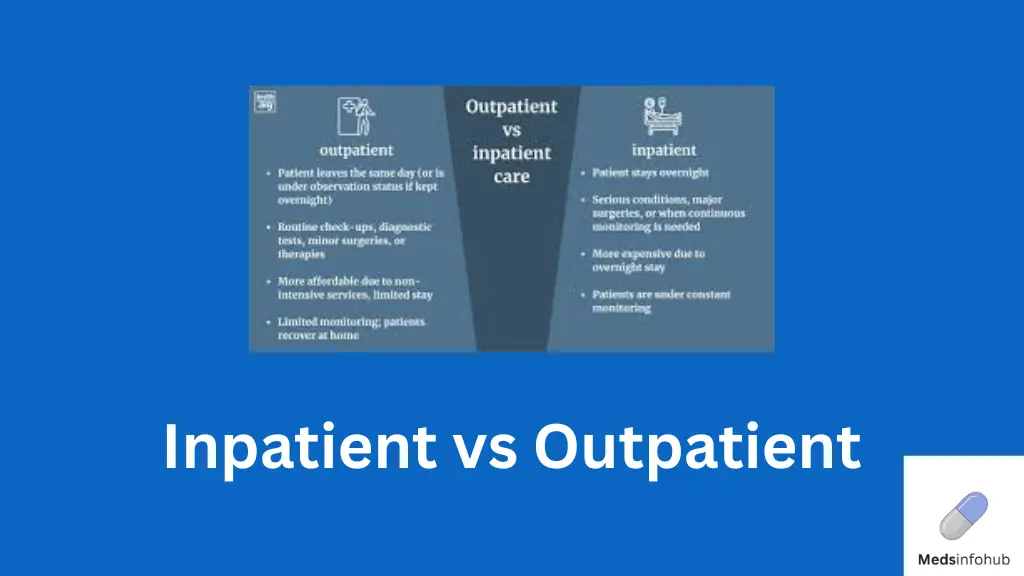
Choosing between inpatient and outpatient care depends on the complexity of treatment, duration, and recovery needs. Understanding the differences helps patients make informed decisions about healthcare services.
What Does Inpatient Care Mean?
Inpatient care refers to medical treatment that requires a patient to stay in a hospital or medical facility overnight or for an extended period.
This type of care is usually necessary for:
- Surgeries requiring post-operative monitoring
- Severe illnesses or infections
- Complex procedures that need continuous observation
During inpatient care, patients receive around-the-clock attention, access to hospital equipment, and support from a healthcare team.
You can also read: Panic Attack Symptoms
What Does Outpatient Care Mean?
Outpatient care allows patients to receive medical treatment without being admitted to a hospital overnight.
Common outpatient services include:
- Routine check-ups and screenings
- Minor surgeries or procedures
- Physical therapy or rehabilitation
- Diagnostic tests like MRI or X-ray
Outpatient care is often more convenient and cost-effective, allowing patients to recover at home after treatment.
Key Differences Between Inpatient and Outpatient Care
Understanding the distinctions helps determine which option is appropriate for your medical needs.
Duration of Stay
- Inpatient: Requires one or more nights in a hospital
- Outpatient: Patients leave the same day after treatment
Level of Monitoring
- Inpatient: Continuous monitoring by healthcare professionals
- Outpatient: Limited monitoring; patient responsible for recovery at home
Complexity of Treatment
- Inpatient: Used for major surgeries or serious medical conditions
- Outpatient: Suitable for minor procedures or follow-up care
Costs
Inpatient care is usually more expensive due to hospital stay, staffing, and equipment usage. Outpatient care is generally cheaper and more flexible.
Examples of Inpatient Care
Major Surgeries
- Heart surgery
- Joint replacement
- Organ transplants
Severe Illnesses
- Pneumonia requiring IV antibiotics
- Stroke management with close monitoring
Mental Health Treatment
Some psychiatric conditions require inpatient hospitalization for safety and structured therapy.
Examples of Outpatient Care
Minor Surgeries
- Cataract removal
- Skin procedures
- Colonoscopy
Diagnostic Testing
- MRI, CT scans, or blood tests
- Outpatient imaging for monitoring conditions
Routine Medical Visits
- Check-ups with a primary care doctor
- Physical therapy or rehabilitation appointments
Advantages of Inpatient Care
- Continuous monitoring for complex conditions
- Access to advanced medical equipment
- 24/7 support from doctors, nurses, and specialists
- Ideal for patients needing close supervision
Advantages of Outpatient Care
- Lower costs compared to hospital stays
- Convenience of returning home the same day
- Reduced risk of hospital-acquired infections
- Flexible scheduling and faster access to services
Factors to Consider When Choosing
Severity of Condition
- Serious or life-threatening conditions often require inpatient care
- Minor procedures and routine visits are typically outpatient
Recovery Needs
- If you need continuous supervision, inpatient care is safer
- If you can manage recovery at home, outpatient care is sufficient
Insurance Coverage
- Some insurance plans have different co-pays or coverage limits for inpatient vs outpatient care
- Always check with your provider to understand cost implications
Personal Preference
- Consider your comfort level, support at home, and convenience
- Some people prefer recovering at home, while others feel safer in a hospital
FAQs About Inpatient vs Outpatient
Can outpatient care turn into inpatient care?
Yes. If a procedure becomes complicated or requires monitoring, outpatient treatment may be converted to inpatient care.
Which is safer?
Both are safe when used appropriately. Inpatient care offers more monitoring, while outpatient care is safe for minor procedures.
Is outpatient care less effective?
Not necessarily. Many outpatient procedures are highly effective, with the benefit of faster recovery at home.
How do costs compare?
Inpatient care is generally more expensive due to overnight stays and medical supervision, while outpatient care is more affordable and flexible.
Final Thoughts
Choosing between inpatient and outpatient care depends on the nature of your medical needs, recovery requirements, and personal preference. Inpatient care provides constant monitoring and support for serious conditions, while outpatient care is ideal for minor procedures, routine visits, and convenient recovery.
Understanding the differences, discussing options with your doctor, and checking insurance coverage helps you make informed decisions that balance safety, comfort, and cost.