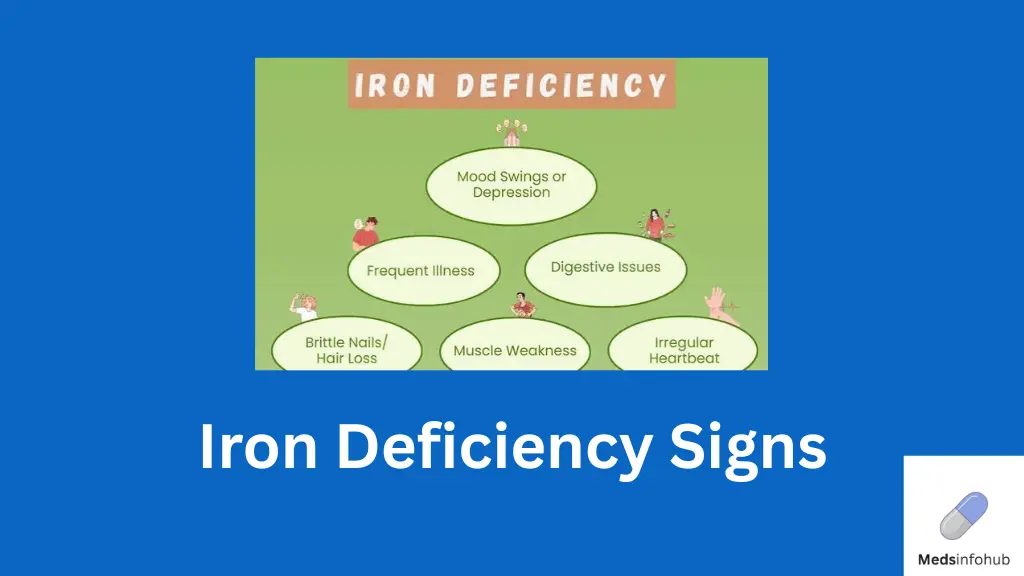
Iron is an essential mineral that helps your body produce hemoglobin, a protein in red blood cells responsible for carrying oxygen throughout the body. When your iron levels become too low, your body cannot produce enough healthy red blood cells, which may lead to iron deficiency and, in some cases, iron deficiency anemia.
In this Iron Deficiency Signs Meds Info Hub guide, you’ll learn how to recognize the symptoms of iron deficiency, understand its causes, identify who is at risk, and explore effective ways to prevent and treat this common nutritional problem.
You can also read: Vitamin D Deficiency Symptoms
What Is Iron Deficiency?
Iron deficiency occurs when your body does not have enough iron to meet its daily needs. Without adequate iron, your body produces less hemoglobin, reducing the amount of oxygen delivered to your tissues and organs.
Iron deficiency is one of the most common nutritional deficiencies worldwide. It can affect children, teenagers, adults, and older adults, although some groups are at higher risk than others.
Recognizing the warning signs early can help prevent complications and improve overall health.
Why Is Iron Important?
Iron plays several essential roles in the body.
It helps:
- Produce healthy red blood cells
- Transport oxygen throughout the body
- Support energy production
- Maintain normal brain function
- Strengthen the immune system
- Support healthy growth and development
When iron stores become depleted, many body systems can be affected.
Common Iron Deficiency Signs
The symptoms of iron deficiency often develop gradually. Some people may not notice any symptoms until their iron levels become very low.
Constant Fatigue
Persistent tiredness is one of the earliest and most common signs of iron deficiency.
Because the body has less oxygen available, muscles and organs work less efficiently, leaving you feeling exhausted even after getting enough sleep.
Pale Skin
Healthy red blood cells give the skin a natural pink or rosy appearance.
Low iron levels may cause:
- Pale skin
- Pale gums
- Pale inner eyelids
- Reduced skin color
Paleness may be easier to notice in natural light.
Shortness of Breath
If everyday activities such as climbing stairs or walking leave you unusually breathless, low iron could be a contributing factor.
Reduced oxygen delivery forces your lungs and heart to work harder during physical activity.
Frequent Headaches
Iron deficiency may reduce oxygen supply to the brain, contributing to headaches in some individuals.
Some people also experience dizziness or lightheadedness.
Weakness
Muscle weakness is another common symptom.
Tasks that once felt easy may become more difficult because muscles receive less oxygen.
Cold Hands and Feet
People with iron deficiency often feel colder than others.
Poor oxygen circulation may contribute to cold hands and feet, especially during cooler weather.
Brittle Nails
Low iron levels can affect nail health.
Possible signs include:
- Thin nails
- Brittle nails
- Spoon-shaped nails (koilonychia)
- Nails that crack easily
These changes usually develop after prolonged deficiency.
Hair Loss
Iron supports healthy hair growth.
Some individuals with iron deficiency notice increased hair shedding or thinning. Hair loss can have many causes, so proper evaluation is important.
Difficulty Concentrating
The brain requires oxygen to function efficiently.
Iron deficiency may cause:
- Trouble concentrating
- Poor memory
- Reduced focus
- Mental fatigue
Children may experience learning or attention difficulties if iron deficiency is not addressed.
Fast Heartbeat
The heart may pump faster to compensate for reduced oxygen-carrying capacity.
Some people notice:
- Heart palpitations
- Rapid heartbeat
- Feeling out of breath during mild activity
These symptoms should always be discussed with a healthcare provider.
What Causes Iron Deficiency?
Several factors can reduce iron levels.
Common causes include:
Poor Dietary Intake
Not eating enough iron-rich foods is one of the leading causes.
People following restrictive diets may need to pay extra attention to their iron intake.
Blood Loss
Blood loss is a major cause of iron deficiency.
Examples include:
- Heavy menstrual periods
- Stomach ulcers
- Gastrointestinal bleeding
- Surgery or injury
Even slow, unnoticed blood loss over time can reduce iron stores.
Reduced Iron Absorption
Certain digestive conditions make it harder for the body to absorb iron from food.
Examples include:
- Celiac disease
- Inflammatory bowel disease
- Previous stomach surgery
Increased Iron Needs
Some stages of life require more iron than usual.
These include:
- Pregnancy
- Childhood
- Adolescence
- Breastfeeding
Meeting increased iron needs through diet or supplements is important when recommended.
Who Is at Higher Risk?
Certain groups are more likely to develop iron deficiency.
These include:
- Women with heavy menstrual periods
- Pregnant women
- Infants and young children
- Teenagers during rapid growth
- Vegetarians and vegans
- Frequent blood donors
- Older adults
- People with digestive disorders
Knowing your risk factors allows you to take preventive measures.
Iron-Rich Foods
Eating a balanced diet is one of the best ways to maintain healthy iron levels.
Animal Sources (Heme Iron)
These are more easily absorbed by the body.
Examples include:
- Lean beef
- Chicken
- Turkey
- Liver
- Fish
- Shellfish
Plant Sources (Non-Heme Iron)
Healthy plant-based options include:
- Lentils
- Beans
- Chickpeas
- Spinach
- Tofu
- Pumpkin seeds
- Fortified breakfast cereals
Pair plant-based iron sources with foods rich in vitamin C, such as oranges, strawberries, tomatoes, or bell peppers, to improve iron absorption.
Foods That Can Reduce Iron Absorption
Some foods and drinks may interfere with iron absorption if consumed with iron-rich meals.
These include:
- Tea
- Coffee
- Large amounts of calcium supplements
- Some high-fiber bran products
Spacing these items away from iron-rich meals may improve absorption.
How Is Iron Deficiency Diagnosed?
A healthcare provider can diagnose iron deficiency through:
- Medical history
- Physical examination
- Blood tests, including hemoglobin and ferritin levels
Additional tests may be recommended to identify the underlying cause of low iron levels.
Early diagnosis helps prevent complications.
Treatment Options
Treatment depends on the severity and cause of the deficiency.
Improve Your Diet
Adding more iron-rich foods is often the first step.
A balanced diet supports healthy iron levels and overall nutrition.
Iron Supplements
Your healthcare provider may recommend iron supplements if dietary changes are not enough.
Take supplements exactly as directed, since excessive iron intake can be harmful.
Treat the Underlying Cause
If blood loss or a medical condition is causing iron deficiency, treating the underlying issue is essential for long-term improvement.
Tips to Prevent Iron Deficiency
Healthy habits can help maintain normal iron levels.
- Eat iron-rich foods regularly.
- Include vitamin C-rich foods with meals.
- Avoid skipping meals.
- Discuss supplements with your healthcare provider if needed.
- Attend routine health checkups.
- Seek medical advice if symptoms develop.
Small dietary improvements can make a significant difference over time.
Frequently Asked Questions
Can iron deficiency occur without anemia?
Yes. Iron stores can become low before anemia develops. Early treatment may prevent progression.
How long does it take to correct iron deficiency?
Recovery depends on the severity of the deficiency and the treatment plan. Many people begin to feel better within a few weeks, but restoring iron stores often takes several months.
Can I take iron supplements without medical advice?
It’s best to consult a healthcare provider before taking iron supplements. Too much iron can be harmful, and it’s important to confirm that iron deficiency is the cause of your symptoms.
Conclusion
Iron is essential for energy production, oxygen transport, and overall health. Recognizing early symptoms such as fatigue, pale skin, weakness, headaches, shortness of breath, brittle nails, and hair loss can help you seek medical attention before complications develop.
This Iron Deficiency Signs Meds Info Hub guide highlights the importance of eating iron-rich foods, understanding personal risk factors, and obtaining proper medical evaluation when symptoms appear. With early diagnosis, appropriate treatment, and healthy lifestyle choices, most people can restore healthy iron levels and improve their quality of life.